
The Department of Industrial Policy and Promotion (DIPP) under the Ministry of Commerce has called a meeting on July 10 to discuss the foreign direct investment (FDI) policy in the cigarette industry.

Govt moves to bring in more clarity on definition of 'control'.

The Department for Promotion of Industry and Internal Trade (DPIIT), under the Ministry of Commerce and Industry, has entered into a partnership with the Startup Policy Forum (SPF), a premier industry organisation representing India's leading new-age companies.

India's pharmaceuticals and medical devices industries are still hopeful that trade negotiations with the US could cut a fairer deal for both sides, after President Donald Trump announced a 25 per cent tariff rate on India on a social networking platform without divulging the finer details.
The department of industrial policy and promotion, nodal agency for FDI policy under the ministry of commerce and industry, seems to have prepared a note for the Cabinet Committee of Economic Affairs to consider.

The campaign will be launched in global as well as domestic markets across the media.
Changes in the multi-brand policy unlikely to help the entire retail sector.

Plugging policy loopholes, the Indian government has spelt out the rules for FDI-funded wholesale or cash-and-carry trading ventures, restricting their merchandise sale to registered retailers and not directly to consumers.
India on Tuesday mooted a marketing policy for the sector though domestic players opposed any move to allow overseas investments in the retail space.
At the same time, Indian companies with a majority foreign shareholding could find it difficult to make 'downstream' investments since the new guidelines do not distinguish between different forms of capital and treats them as FDI. So, a company with high non-FDI foreign capital was considered an Indian entity. Now, they will be considered foreign-owned and their downstream investments will have to follow sectoral restrictions.

The government is likely to announce significant policy measures relating to allowance of foreign direct investment (FDI) in the multi-brand retail segment, even as the Department of Industrial Policy and Promotion (Dipp) under the Ministry of Commerce and Industry is giving final touches to the draft report prepared by an inter-ministerial committee.

The industry ministry on Monday proposed foreign direct investment up to 74 per cent in the defence sector from the present 26 per cent, stating urgent upgrade of equipment in the armed forces was needed as a bulk of them suffered from obsolescence.

The government will release the revised consolidated FDI policy paper, a ready reckoner on foreign investment related regulations for overseas investors, on September 30.

E-auction or e-tendering moves the process of bidding for government contracts completely online, removing most manual procedures and, therefore, creating an accountability trail.

'Additionally, the significant employment multiplier will boost direct and indirect jobs of up to 1.1 million.'

From toys, footwear and furniture to insulated flasks, smart meters, and air coolers - the Central government over the last decade has mandated higher standards for production and imports of such items. Sample this: Till 2014, there were 14 Quality Control Orders (QCOs) covering 106 products. By the latest count, there are 156 QCOs on 672 products.

The government has decided to postpone the release of the new Foreign Trade Policy (FTP) and extend the existing one by six months on account of global uncertainties and currency fluctuations. The government was scheduled to announce the new FTP by the end of September. The current policy was to end on September 30.

Before taking over as the CEO of National Institution for Transforming India (Niti Aayog), he was Secretary, Department of Industrial Policy and Promotion, which has been rechristened as the Department for Promotion of Industry and Internal Trade.

FDI into the country increased by 30 per cent to $21.62 billion during April-September this fiscal.

The Modi government's flagship initiative 'Make in India' launched 10 years ago has helped the country boost exports, push investments and promote manufacturing. Under the initiative, launched on September 25, 2014, a series of measures have been taken by the government to boost local manufacturing. These initiatives include the rollout of production linked incentive (PLI) schemes for 14 sectors, easing foreign direct investment (FDI) norms, reducing compliance burden to improve business climate, all approvals through single window, and rolling out of the national logistics policy.
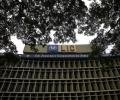
The government is working towards further review and simplification of the foreign direct investment (FDI) policy to facilitate the proposed initial public offering (IPO) of the Life Insurance Corporation (LIC), Department for Promotion of Industry and Internal Trade (DPIIT) secretary Anurag Jain said on Thursday. The final decision will be taken by the Cabinet. The industry department is working together with the finance ministry's department of financial services (DFS) and department of investment and public asset management (DIPAM) towards a successful listing of the life insurer on the domestic bourses, which is expected to be the largest in India.

Foreign direct investment (FDI) inflows into India have crossed the $1 trillion milestone in the April 2000-September 2024 period, firmly establishing the country's reputation as a safe and key investment destination globally. According to data from the Department for Promotion of Industry and Internal Trade (DPIIT), the cumulative amount of FDI, including equity, reinvested earnings and other capital, stood at $1,033.40 billion during the said period.

The Department for Promotion of Industry and Internal Trade (DPIIT) will soon start public consultation for a national retail trade policy, which is likely to include an insurance scheme aimed at providing financial protection against losses caused by theft, accidents or natural calamities. The policy will also spell out ways to give traders access to low-cost finance, promote digital inclusion, and create necessary infrastructure to support them, a senior government official told Business Standard. This is expected to offer relief especially to traditional traders, who are facing stiff competition from large e-commerce players.
India expects an inflow of $12 billion foreign direct investment into the country during the 2006-07 fiscal, a government official said on Saturday. \n


The Adani Group plans to invest a record $15-20 billion across businesses over the next five years to chart out the next phase of growth, chairman Gautam Adani said on Tuesday as he touted the conglomerate's strong balance sheet and robust business to shrug off relentless scrutiny it faces. Record earnings from the businesses ranging from seaports to airports, renewable energy parks to data centres, cement to gas and electricity has built India's largest infrastructure group that not only exists just to serve the markets but to serve the nation's destiny, he said.

The finance minister, in her Budget speech, should focus more on what she is directly responsible for, rather than on programmes where her role is largely supportive, notes Nitin Desai.

Vijay, with his chief ministerial ambitions, is a one-man army, at least as of now, and his campaign team considers him omnipresent. He has to be present in all districts, if not all constituencies at the same time, as there is no second-line leader or platform speaker in the party, who can draw crowds, points out N Sathiya Moorthy.

Despite public-private partnership projects announced in several rail budgets, the investment since 2000 has been merely Rs 3,000 crore.
.jpg)
After a high-level meeting held on Friday chaired by Prime Minister Manmohan Singh, it has been decided that the Commerce and Industry would soon start a consultation process to address 'dangers inherent' in the current model of FDI in brownfield pharma units.

Many industry executives have said the draft e-commerce policy is being perceived as nationalistic but not overly protectionist and it is providing preference to Indian players against foreign companies. This might have an impact on investment by large players such as Walmart and Amazon in the country, said the executives. They said e-commerce was a very small portion of the retail industry and at a nascent stage and did not require heavy hammer regulations. Though the policy talks about being equally applicable to foreign and domestic players, it mentions that foreign direct investment (FDI) takes precedence over the e-commerce policy in any area of overlap.

The government on Friday came out with Foreign Trade Policy (FTP) 2023 which seeks to boost the country's exports to $2 trillion by 2030 by shifting from incentives to remission and entitlement based regime. Unlike the practice of announcing 5-year FTP, the latest policy has no end date and will be updated as and when needed, said Director General of Foreign Trade (DGFT) Santosh Sarangi while briefing media about FTP 2023. Earlier, Commerce and Industry Minister Piyush Goyal unveiled FTP 2023 which will come into effect from April 1, 2023.

The draft favoured up to 49 per cent foreign equity in inventory model in the case of 100 per cent made in India products sold through Indian management-controlled platforms with resident Indian founders/promoters.

Exports declined for the fourth-consecutive month by 10.3 per cent year-on-year to $34.98 billion in May, while the trade deficit widened to a five-month high of $22.12 billion. According to the data released by the commerce ministry on Thursday, key export sectors recording negative growth include petroleum products, gems and jewellery, engineering goods, ready-made garments of all textiles and chemicals. Imports also declined 6.6 per cent, six-month in a row, to $57.1 billion against $61.13 billion in the same month last year, the data showed.

For months, offline retailers and traders have been lobbying hard for a national retail policy to protect their business from the growing influx of e-commerce.

Another priority in the first 100 days could be the launch of an e-platform -- Trade Connect -- to help exporters connect with stakeholders of international trade.

Elon Musk, who has previously vowed to "go to war" to defend the H-1B visa program, has reignited debate surrounding the program by labeling it "broken" and in urgent need of "major reform." Musk, along with Indian-American tech entrepreneur Vivek Ramaswamy, has been tapped by Trump to lead his Department of Government Efficiency (DOGE). While Musk acknowledges the need for foreign workers in the tech industry, he believes the current H-1B system needs significant changes, including raising the minimum salary and adding a yearly cost for maintaining the visa. The H-1B visa, which allows US companies to employ foreign workers in specialty occupations, has been a subject of debate for years. The tech industry advocates for more H-1B visas to attract highly skilled workers, while some argue that it allows businesses to replace Americans with lower-paid foreign workers.

The final policy may be out only after formation of the new government, according to sources

It was one of the key promises made by the Congress ahead of the 2018 assembly polls, following which the party returned to power in the state after a gap of 15 years.

'We have to be prepared for the larger disruption that is likely to take place.'
